
Construction Delay Claims in Illinois: How to Prove Damages and Protect Your Right to Compensation
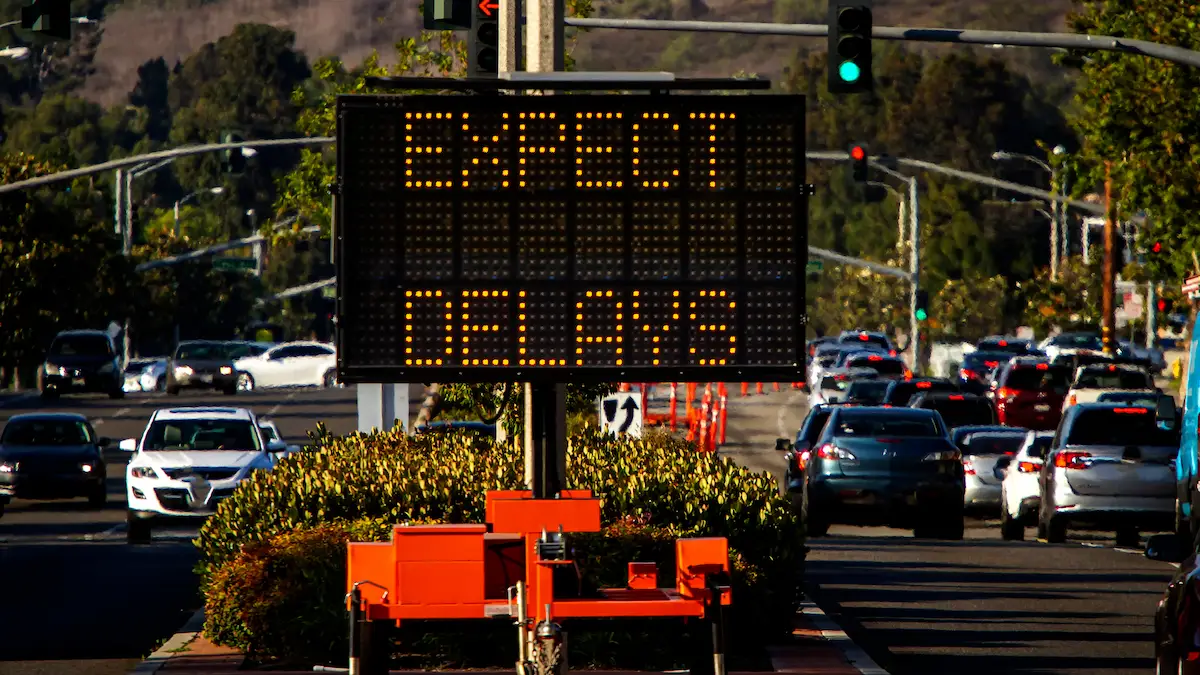
Construction delays cost money - sometimes a lot of it. When a project runs behind schedule, the financial impact cascades: contractors carry extended overhead, owners lose rental income or revenue from the completed space, subcontractors sit idle waiting for access, and everyone's costs climb. The longer the delay, the worse it gets.
Illinois law provides legal remedies for parties harmed by construction delays, but recovering damages is not automatic. Whether you are entitled to compensation - and how much - depends on what caused the delay, what your contract says about it, and whether you documented the impact while it was happening. A contractor who waits until the project is over to piece together a delay claim from memory is in a far weaker position than one who tracked the problem in real time.
This guide explains how Illinois law classifies construction delays, what makes a delay compensable, how liquidated damages and no-damages-for-delay clauses affect your rights, and what you need to do to build a delay claim that holds up in court or arbitration.
Types of Construction Delays Under Illinois Law
Not all delays are treated the same. Illinois construction law categorizes delays based on who caused them and whether the delayed party is entitled to additional time, additional money, or both.
Excusable vs. Non-Excusable Delays
An excusable delay is one that is not the fault of the contractor. This includes delays caused by the owner (late design changes, failure to provide site access, delayed permit approvals), by the architect (defective plans and specifications), by third parties (utility companies, government agencies), or by events outside anyone's control (severe weather, natural disasters, labor strikes, material shortages). When the delay is excusable, the contractor is generally entitled to a time extension - additional days added to the contract completion date so that the contractor is not penalized for something it did not cause.
A non-excusable delay is one caused by the contractor or within the contractor's control - inadequate workforce, poor scheduling, failure to order materials on time, or subcontractor mismanagement. When the delay is non-excusable, the contractor bears the cost consequences and may owe the owner damages for the late completion.
Compensable vs. Non-Compensable Delays
Excusable delays are further divided into compensable and non-compensable categories. A compensable delay is one where the contractor is entitled to both additional time and additional money - typically extended overhead, increased labor costs, and other time-related damages. Compensable delays are usually caused by the owner or the owner's agents: late design decisions, defective specifications, failure to coordinate other trades, or denial of site access.
A non-compensable delay is excusable (so the contractor gets a time extension) but does not entitle the contractor to additional money. The classic example is severe weather. No one caused it, the contractor should not be penalized for it, but the owner should not have to pay for it either. The contractor gets more time but absorbs its own extended costs.
Concurrent Delays
Concurrent delays occur when two or more independent causes delay the project at the same time - for example, the owner fails to deliver revised drawings while the contractor simultaneously falls behind on its own work. Concurrent delay is one of the most difficult issues in construction litigation because both parties share responsibility. Illinois courts generally hold that when concurrent delays exist, neither party can recover delay damages from the other, though the contractor may still be entitled to a time extension for the owner-caused portion.
Common Causes of Construction Delays
Delays arise from a wide range of sources. The legal significance of each depends on who caused it and whether it was foreseeable at the time of contracting.
Owner-caused delays include late or incomplete design documents, failure to obtain permits or approvals, delayed responses to requests for information (RFIs), changes in scope that require redesign, failure to provide site access, and interference with the contractor's planned sequence of work.
Design professional delays include errors or omissions in the plans and specifications, slow turnaround on submittals and shop drawing approvals, and conflicts between architectural and engineering drawings that require resolution before work can proceed.
Contractor-caused delays include inadequate staffing, poor scheduling, failure to coordinate subcontractors, defective work requiring correction, and failure to timely procure materials and equipment.
Third-party and force majeure delays include severe weather beyond what was reasonably anticipated, labor disputes, material shortages, utility relocation delays, government-imposed shutdowns, and unforeseen site conditions such as contaminated soil or unexpected rock.
The cause of the delay determines who bears the risk. A well-drafted construction contract will allocate these risks explicitly. When the contract is silent, Illinois common law and the applicable statutes fill the gaps.
Liquidated Damages Clauses: What They Are and When They Are Enforceable
Many construction contracts include a liquidated damages clause that sets a fixed dollar amount per day for late completion. The purpose is to establish in advance what the owner's damages will be if the project runs late, avoiding the need to prove actual damages after the fact.
Under Illinois law, a liquidated damages clause is enforceable if two conditions are met: first, the actual damages from delay must have been difficult to calculate at the time the contract was signed; and second, the amount specified must be a reasonable estimate of the anticipated harm - not a penalty designed to punish the contractor.
If a court determines that a liquidated damages provision is an unenforceable penalty, the owner must prove actual damages instead. Courts look at whether the daily rate bears a reasonable relationship to the losses the owner would actually suffer from late completion - lost rent, extended financing costs, inability to operate the facility, or other quantifiable harm.
Contractors should pay close attention to liquidated damages provisions before signing. On a project with a $1,000-per-day liquidated damages rate and a 90-day delay, the exposure is $90,000 - regardless of whether the owner suffered any actual loss. If the delay is excusable (caused by the owner or by events outside the contractor's control), the contractor's remedy is a time extension that offsets the liquidated damages exposure for that period.
No-Damages-for-Delay Clauses and Their Exceptions
A no-damages-for-delay clause is a contract provision stating that the contractor's sole remedy for any delay - regardless of cause - is a time extension, not monetary compensation. These clauses are common in both public and private construction contracts, and they can significantly limit a contractor's ability to recover the financial impact of owner-caused delays.
Illinois courts generally enforce no-damages-for-delay clauses but construe them strictly against the party seeking their benefit. The Illinois Supreme Court in J & B Steel Contractors, Inc. v. C. Iber & Sons, Inc., 642 N.E.2d 1215 (Ill. 1994) recognized four judicially created exceptions where the clause will not bar recovery:
1. Delay caused by bad faith, fraud, or active interference by the party seeking to enforce the clause.
2. Delays not within the contemplation of the parties at the time of contracting. If the delay was caused by something neither party could have reasonably foreseen when the contract was signed, the clause may not apply. Courts apply a "reasonable foreseeability" test - if the type of delay was foreseeable at the time of contracting, the exception does not apply, even if the specific event was unexpected. See Asset Recovery Contracting, LLC v. Walsh Construction Co. of Ill., 2012 IL App (1st) 101226 (applying the foreseeability test and enforcing the clause).
3. Delay of an unreasonable duration. When the delay extends so far beyond what was anticipated that the delayed party would have been justified in abandoning the contract entirely, the clause may be unenforceable as applied to that delay.
4. Delay attributable to inexcusable ignorance or incompetence of the party attempting to enforce the clause.
These exceptions are recognized but rarely successful. In Northeast Illinois Regional Commuter Railroad Corp. v. Judlau Contracting, Inc., No. 20-CV-02901 (N.D. Ill. Mar. 20, 2024), the court reaffirmed the Illinois framework but declined to apply the exceptions, holding that no reasonable jury could find bad faith on the facts presented. Vague allegations of poor coordination or general mismanagement are not enough - the contractor must demonstrate specific conduct that goes beyond ordinary negligence and beyond what the parties could have contemplated when they agreed to the clause.
Contractors who sign contracts containing no-damages-for-delay clauses should understand the risk they are accepting. If negotiating the clause out entirely is not possible, narrowing its scope - for example, limiting it to force majeure events and excluding owner-caused delays - is the next best option.
How to Document a Construction Delay Claim
Delay claims are won or lost on documentation. The legal framework is clear, but proving entitlement and damages requires contemporaneous records that many contractors fail to create until it is too late.
Maintain an updated project schedule. The original baseline schedule is the foundation of any delay claim. It establishes what the parties expected at the start of the project. As the project progresses, updated schedules show how the actual progress compared to the plan and where delays occurred. Without a schedule analysis, it is extremely difficult to prove that a specific event caused a specific delay to the completion date.
Keep detailed daily logs. A superintendent's daily log that records weather conditions, workforce counts, work performed, equipment on site, deliveries received, and any disruptions or directions from the owner is one of the most valuable pieces of evidence in a delay case. Courts give significant weight to records created in the ordinary course of business at the time the events occurred.
Comply with contractual notice requirements. Most contracts require the contractor to provide written notice of a delay claim within a specified number of days after the event occurs. Failing to provide timely notice can result in a complete waiver of the claim. Even when the relationship with the owner is informal, send the notice in writing and keep a copy.
Document the cause and the impact separately. Proving that a delay occurred is only half the battle. The contractor also needs to show what caused the delay and how it impacted the project completion date. A critical path analysis - typically prepared by a scheduling expert - traces the chain of cause and effect from the delay event to the extension of the project duration.
Track delay-related costs. Extended overhead (field office, supervision, equipment, insurance, utilities), labor inefficiency, acceleration costs (overtime, additional crews brought in to recover lost time), and escalation of material prices are all potentially recoverable, but only if they are documented with specificity. Commingling delay costs with base contract costs makes them much harder to prove.
Remedies for Construction Delays in Illinois
The available remedies depend on the type of delay, the contract terms, and the strength of the documentation.
For excusable, non-compensable delays (such as severe weather), the contractor's remedy is a time extension - additional time to complete the project. This protects the contractor from liquidated damages but does not provide monetary compensation for extended costs.
For compensable delays (typically owner-caused), the contractor may recover extended general conditions (field overhead), home office overhead (often calculated using the Eichleay formula), increased labor and material costs, lost productivity, and in some cases lost profits on other projects the contractor could not pursue because its resources were tied up on the delayed project.
When the contractor causes the delay, the owner may recover actual damages for late completion - lost rental income, extended construction loan interest, additional supervision costs, and other quantifiable losses - or may enforce a liquidated damages clause if the contract includes one.
In extreme cases where the delay is so severe that it constitutes a material breach, the non-breaching party may have the right to terminate the contract. Termination is a high-risk decision with significant legal consequences and should not be made without legal advice.
Many construction contracts require that delay disputes be submitted to mediation or arbitration before litigation. These processes can be faster and less expensive than a full trial, but the outcome depends heavily on the quality of the documentation and the strength of the scheduling analysis. For more on how construction disputes are resolved in Illinois, see our detailed guide.
If you are dealing with a construction delay on an Illinois project - whether you are the party seeking damages or the party defending against a delay claim - early legal involvement can make a significant difference. Delay claims are technically complex, and the decisions made during the project (what to document, when to send notice, how to track costs) often determine whether the claim succeeds. Contact us to discuss your situation.
Dealing with a Construction Delay?
Whether you need to pursue a delay claim, defend against one, or evaluate your contract's delay provisions before a project begins, we can help. We offer free, confidential consultations to review your situation and advise on the best path forward.
Schedule a Free ConsultationFrequently Asked Questions
What is the difference between an excusable and a compensable delay?
An excusable delay is one not caused by the contractor - it entitles the contractor to additional time. A compensable delay goes further: the contractor gets both additional time and additional money. Severe weather is typically excusable but not compensable (the contractor gets more time but no extra payment). An owner-caused delay - such as late design changes or failure to provide site access - is usually both excusable and compensable.
Can I recover delay damages if my contract has a no-damages-for-delay clause?
Possibly. Illinois courts generally enforce these clauses, but they recognize exceptions for delays not contemplated by the parties, delays of unreasonable duration, delays caused by the enforcing party's gross incompetence, and delays resulting from active interference or bad faith. These exceptions require specific proof - vague allegations of mismanagement are not enough.
What is a liquidated damages clause and can I challenge one?
A liquidated damages clause sets a fixed daily rate the contractor owes the owner for each day of late completion. Illinois courts will enforce it if the amount was a reasonable estimate of anticipated damages at the time of contracting and if actual damages were difficult to calculate. If the amount is disproportionate to the owner's actual loss, the contractor can argue it is an unenforceable penalty.
How do I prove that the owner caused the delay?
Through a critical path analysis based on the project schedule. You need to show that the owner's action (or inaction) impacted an activity on the critical path - the sequence of tasks that determines the overall project completion date. Supporting documentation includes daily logs, correspondence, RFI logs, submittal logs, schedule updates, and photographs. The stronger the contemporaneous documentation, the stronger the claim.
Can a subcontractor bring a delay claim against the general contractor?
Yes. A subcontractor whose work is delayed by the general contractor's failure to coordinate other trades, provide access, or process change orders may have a delay claim. However, many subcontracts contain flow-down provisions that incorporate the prime contract's no-damages-for-delay clause or limit recovery to amounts the general contractor recovers from the owner. Review the subcontract carefully before assuming you have a claim.