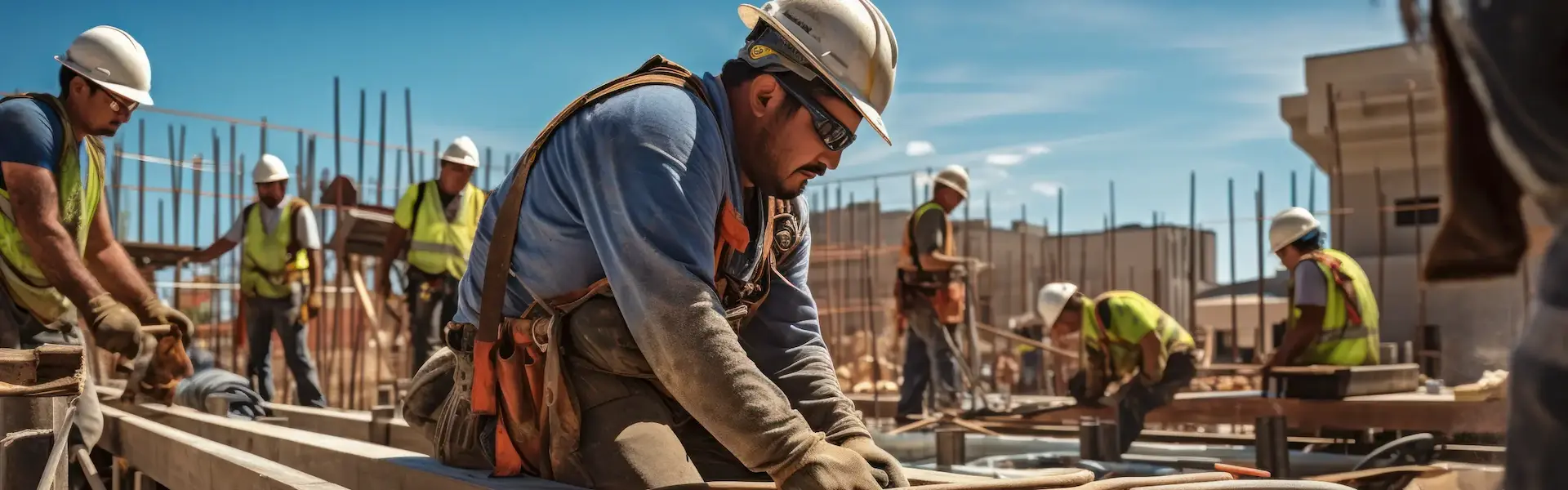
Construction runs on cash flow. When payment stops, everything downstream suffers. Subcontractors cannot pay their crews, suppliers cut off materials, and projects stall. Whether you are a general contractor waiting on an owner, a subcontractor chasing a GC, or a property owner withholding payment over defective work, the dispute needs to be resolved before the financial damage spreads.
We represent contractors, subcontractors, suppliers, and property owners in construction payment disputes throughout Chicago, Cook County, DuPage County, Lake County, and Will County.
Payment Disputes We Handle
Non-Payment and Slow Payment: The most straightforward payment dispute: work was performed, invoices were submitted, and payment has not arrived. Sometimes the reason is a cash flow problem upstream. Other times, the paying party manufactures objections to justify withholding money. We help unpaid parties collect what they are owed and help paying parties respond to claims that lack merit.
Retainage Disputes: Retainage is the percentage of each payment held back until project completion. Disputes arise when the party holding retainage refuses to release it after the work is complete, often citing punch list items, warranty claims, or project closeout requirements that have already been met or were never agreed to.
Back Charges and Offsets: A common tactic in payment disputes is the sudden appearance of back charges: deductions for alleged defects, cleanup, damage, or delays. When back charges appear only after payment is demanded, they deserve scrutiny. We evaluate whether back charges are legitimate and challenge those that are inflated or fabricated.
Pay-When-Paid and Pay-If-Paid Clauses: Subcontracts frequently include clauses tying the subcontractor's payment to whether the GC has been paid by the owner. Illinois courts generally treat pay-when-paid language as a timing mechanism, not a permanent defense against payment. The distinction matters, and the specific contract language controls the outcome.
Prompt Payment Violations: Illinois prompt payment laws regulate how quickly contractors, subcontractors, and suppliers must be paid for construction work. These statutes are designed to protect cash flow on construction projects by establishing approval deadlines, payment timelines, and consequences for late or wrongfully withheld payments.
Both private and public construction projects in Illinois are subject to prompt payment requirements, but they are governed by different statutory frameworks depending on the type of project and the contracting entity. For private commercial projects, payment obligations are governed by the Illinois Contractor Prompt Payment Act. Public construction projects are regulated by separate statutes applicable to state agencies and local governmental bodies.
When a paying party fails to approve or dispute a payment application within the required time, or withholds payment without proper justification, the unpaid party may be entitled to statutory interest and, in some cases, additional remedies. Prompt payment violations often become central issues in construction payment disputes, particularly where delays in payment create downstream financial pressure on subcontractors and suppliers.
Disputed Change Orders: Work was requested, performed, and now the other side refuses to pay because the change was never formally approved. Change order disputes often come down to what was communicated, what was documented, and whether the work was authorized even without a signed change order. For a detailed look at the legal framework for recovering payment on disputed change orders, see our post on change order disputes in Illinois.
Protecting Your Right to Payment
The strongest payment claims are built long before a dispute arises. Contractors and subcontractors who document their work, follow notice requirements, and preserve their lien rights are in a far better position when payment is withheld.
Key steps include maintaining detailed records of work performed and materials delivered, submitting pay applications on schedule and in the required format, sending preliminary notices where required to preserve mechanics lien rights, responding to back charges and deficiency notices in writing, and tracking retainage balances and release conditions.
When payment is withheld despite these steps, the next move depends on the contract terms, the amount at stake, and the available legal tools, including mechanics liens, bond claims on public projects, and direct litigation.
How We Help
We work with both sides of construction payment disputes:
For unpaid contractors and subcontractors:
- Evaluate your contract terms and identify the strongest path to payment
- File or preserve mechanics liens before deadlines expire
- Pursue claims under the Illinois Prompt Payment Act
- Challenge fabricated back charges and inflated offsets
- Negotiate settlements or litigate when necessary
For property owners and general contractors defending payment claims:
- Evaluate whether work was performed according to contract specifications
- Document legitimate deficiency and back-charge claims
- Respond to mechanics lien filings and bond claims
- Negotiate resolution without unnecessary litigation costs
Common Questions About Construction Payment Disputes
How long do I have to file a mechanics lien if I have not been paid?
In Illinois, a mechanics lien must be recorded within four months of the last date of work to have priority over lenders and third-party purchasers, or within two years to have priority over owners. The four-month deadline is the one that matters most in practice because missing it significantly weakens the lien's value. If payment is overdue, consult an attorney before either deadline passes.
Can a contractor withhold payment based on alleged defects without documentation?
A party can raise defective work as a defense to payment, but vague claims without inspection reports, photos, or expert opinions are often used as leverage to avoid paying. If back charges appear only after you request payment, that timing can undermine their credibility.
Does Illinois have a prompt payment law for construction projects?
Yes. Illinois regulates prompt payment on both private and public construction projects, but different statutes apply depending on the nature of the project.
For private construction projects, payment obligations are governed by the Illinois Contractor Prompt Payment Act (815 ILCS 603/1 et seq.). With limited exceptions, this statute applies to private commercial projects and establishes deadlines for approving payment applications, making payments to contractors, and paying subcontractors and suppliers. Failure to comply may result in interest penalties and, in some circumstances, the right to suspend work.
For public construction projects, Illinois has separate prompt payment statutes. Local public projects are governed by 50 ILCS 505/1 et seq., while state public projects are governed by the State Prompt Payment Act, 30 ILCS 540/0.01 et seq. These laws impose approval and payment deadlines on government entities and require contractors to promptly pay downstream subcontractors and suppliers after receiving payment.
What are the payment deadlines under Illinois prompt payment laws?
For private construction projects governed by the Illinois Contractor Prompt Payment Act, owners generally must approve or object to payment applications within 25 days of receipt and pay approved amounts within 15 days. Contractors must then pay subcontractors and suppliers within 15 days of receiving payment.
On local public projects, the government entity must approve a proper payment request within 30 days. Once approved, payment must be made within 30 days. Contractors must then pay subcontractors and suppliers within 15 days of receiving payment.
For state public projects, payment requests must generally be approved within 30 days, and payment must be made within 60 days after approval. Upon receipt of payment, contractors must pay subcontractors and suppliers by the earlier of 10 business days or 15 calendar days.
What should I do if I receive a pay application rejection or back charge?
Document everything. Respond in writing, request specifics on the rejection or back charge, and preserve your own records of the work performed. Do not continue working without addressing the dispute, as continued performance can complicate your legal position.
For more information, visit our Construction Disputes page or our Construction Disputes FAQs.
If nonpayment has reached the point where you are considering stopping work, Illinois law may protect your right to suspend. Read our article on when a contractor can stop work for nonpayment in Illinois to understand the statutory requirements and risks.
Subcontractors who have been left unpaid after the owner paid the general contractor often assume their lien rights are gone, but Illinois law preserves significant protections in that scenario. For a deeper analysis of Section 21, the trust fund doctrine, and the sworn statement requirement, read our post on subcontractor mechanics lien rights when the owner has already paid the GC.
If a mortgage, construction loan, or competing lien claims are in play, the priority analysis often determines what you actually collect. Illinois apportionment rules under Section 16 and the construction-lender allocation framework set out in LaSalle Bank v. Cypress Creek drive recovery on heavily-financed projects. See our post on mechanics lien priority in Illinois for a deeper treatment of how priority affects realistic recovery.
If retainage is being withheld beyond what the statute allows, or the owner has missed the payment deadline, see our post on retainage disputes in Illinois for a full breakdown of the caps, timelines, and legal remedies available.
Dealing with a Construction Payment Dispute?
Whether you are owed money for work you performed or defending against a payment claim you believe lacks merit, we can help you evaluate your options and take the right next step.
Schedule a ConsultationWhat to Expect During Your Consultation
During your consultation, we will review your contract, the payment history, and the current status of the dispute. You will leave with a clear understanding of your legal position and the most effective options for resolving the situation.